Thursday, August 26, 2010

THE FRENCH RIVIERA AND THEN SPAIN


THE FRENCH RIVIERA, VACATIONING SITE OF LA CREME OF THE WORLD

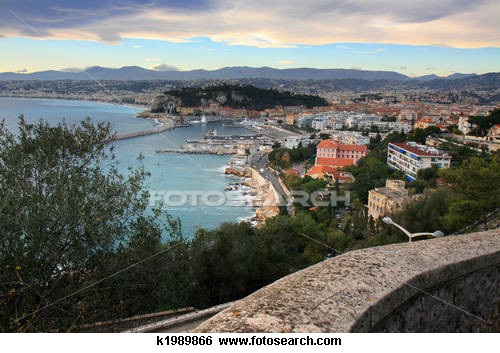
We left the Italian Riviera and headed to the Côte d'Azur, better known worldwide as the French Riviera, in the Mediterranean coast in the southeast corner of France, extending from the Italian border in the East to the Spanish border in the South West. The most important places in this area are Monaco, Nice and Cannes but the whole coastline is filled with small and beautiful resort towns which are vacationing and summer places for some of the richest people in the world. The French Riviera benefits from an average of 300 days of sunshine a year, it extends for about 120 miles (from Menton in the East, to Bandol, near Toulon in the West), of coastline with beautiful white sand beaches and literally thousands of restaurants, catering the finest food in the world.


THE MONTECARLO CASINO WHERE
THE RICH TRY THEIR LUCK

We visited Monaco (Montecarlo), one of the smallest independent states in the world, which was then governed by Prince Rainiero and his wife, former American darling and movie actress, Princess Grace (formerly Grace Kelly). Monaco is famous for its casino, where the rich and the famous regularly choose to lose (or at least risk) parts of their fortunes. Had we entered and played, we would have lost our shirts, since we had little else to lose, but we couldn’t afford to, so we passed it. We just passed by and took a couple of photos showing the Casino Palace and the beautiful gardens in the forefront. Afterwards we took a look at the circuit where a famous car race takes place every year and then we headed for Nice, which then had a population of about 400,000 and was famous for its beaches and for being home to one of the major yachting centers in the world, with many luxurious marinas along its coast. It is here, in one of the beaches near Nice that we the young men in the tour, had a real ball, watching, for the first time in our lives, a crowd of beautiful girls sunbathing topless along a beach stretch of about half of a mile. Watching this great spectacle took us about two hours and we exhausted our reserves of film for our cameras, much to the disgust of our female companions who did not enjoy much the whole thing. We told them not to be shy and do as they saw it, to not avail. Latin girls in those days were still shy, I don't believe they are as shy any more.
Manolo, our Galician driver, parked the bus, got his swimming suit on, and came along with us the boys. Manolo, who never stopped telling jokes about his countrymen, began his funny joke telling as he was lying on the beach and enthusiastically watched the topless girls. He told us about the fifty Galicians who drowned as they were trying to dig a tunnel to escape from a prison-ship; and the one about the little Galician kid who was inconsolable crying for the death of his cat. In trying to console him, his mother told him that he should not cry because the little cat was already in God’s hands. The kid shouted back, “but mom, what the hell is God going to do with a dead cat? So much for the smart Galicians!
We stayed in Nice overnight, went to a bar where we found people from all over the world and ended up having the time of our lives, singing, dancing and drinking our heads out. We were among the few who spoke both English and Spanish in a world where most people spoke only one language, be it English, French, Italian or German. We made friends with a lot of young people who spoke English, Italian and even German, not that much with French speaking people who appeared to be a bit uncomfortable with English speaking people, a perception that I have heard repeated by many English speaking travelers who have gone to France. That was a long, long night. We went to bed at five AM and asked Manolo to take it easy the next day, which he did. Most of us got up well entered the afternoon and all of us began our day with an early dinner at four PM. Our next step was Cannes, still in the French Riviera.


CANNES, AT THE HEART OF THE FRENCH RIVIERA

The city of Cannes is the "star" of the French Riviera; it is famous for the International film festival which carries its name, for its fancy hotels, luxurious cars, for its beautiful beaches and for the world famous visitors who are attracted to this place. The city is centered on the old port; with the down town part quite compact. Many of the art galleries, jewelry and exclusive clothing shops are located along the Bvd. de la Croisette where most of the exclusive hotels are located as well. The miles long white sandy beaches of Cannes run along the Rue Golfe de la Napoule, or along the Bvd. de la Croisette. Our “center of operations was located in the beach, in front of the Bvd. de la Croisette, where we were able to enjoy the view of the city, but more than anything, the view of the beautiful girls sunbathing topless everywhere we could see. Mama Mia, la vita e Bella!
We spent the day mostly at the beach playing ball and taking as many pictures as we could and, at the end of the day, my fellow companions decided to vote where to go next. Much to my disappointment, the votes favored Paris as opposed to Madrid 13-7. As a result, I had to split because I had been to Paris already and I wanted to visit Spain. This was my last day and night with the group, at night, we drank beer like Cossacks drink vodka, we danced and sang Latin songs out loud, I felt sad because we had to split, but, that is the nature of life, every one has his own plans and the next day I took a train to Madrid, I was again all by myself.
Betty and I said farewell to each other in a very affectionate but mature way. There was no tear dropping, no promises of anything but to keep in touch by writing each other, which we did for a short period of time. She and I had a beautiful time together; we kissed and wished each other the best. We kept corresponding for a few months afterwards, but, it was obvious that ours was only a summer thing which did not leave any scars in either side. It was just one more of the nice things to remember from my first vacation in Europe!
The following day I was in Madrid, Spain and as originally intended and again, I began to use my little “Europe on $20 a day” book with enormous success. I arrived at the train station and took a taxi to my hotel in “La Gran Via” only two blocks away from the Plaza de España, the site where an immense statue of both Don Quixote and his loyal assistant Sancho Panza is a great testimony to the admiration of Spain and the whole Spanish World to the greatest writer of the Spanish Language, Don Miguel de Cervantes y Saavedra. That was a great place to be in Madrid. My hotel was located in a very old building, perhaps from the end of the nineteen century or even older, but my room was very nice and clean, and the cost was only $10/day. I had my own bathroom (which is a luxury in Europe at my level of a budget), with an elevator which was as slow as a turtle, therefore, in the morning, instead of taking the elevator I used to take the stairs. I had promised myself that I would eat as much Paella as possible when I arrived in Madrid, and so I did. A nice and clean restaurant where they served great Paella was only about a hundred yards away across the street, I had Paella at lunch and I had more Paella for dinner. The partying, drinking and dancing of the last two and a half weeks was over. This was time to retake the cultural and the sightseeing part of my vacations in Europe.
In my next posting, SPAIN THE BEAUTIFUL

Friday, August 20, 2010

ROME, NAPLES, POMPEII AND THE ITALIAN RIVIERA


THE COLISEUM IN ROME,
THE ROMAN EMPIRE'S ARCHITECTURE AT ITS BEST

A couple of days later we arrived in Rome, “the eternal city”, the city with so much history and so much art and architecture. Rome is located in the central-western portion of the Italian boot and apparently it was originally inhabited by blond people coming from the north, different from those who populated the rest of the Italian peninsula.
Rome's history spans over two thousand five hundred years and according to the legend, it was founded by Romulus and Remus, the twin sons of a princess and a god that abandoned their children, who soon were adopted by a female wolf which fed them till they grew up to take care of themselves. Rome was the capital of the Roman Empire for over seven hundred years and since the 2nd Century AD Rome has been the center of the Catholic Church. The Vatican City, an independent city-state presided by the Pope is located within the boundaries of Rome. At the end of the middle ages, Rome was ruled by various popes who transformed the city, along with Florence into one of the major centers of the Italian and European Renaissance.


THE VATICAN CITY, A CITY STATE WITHIN THE CITY OF ROME

Even though the group I joined was formed by young people who liked partying above almost everything else, we allowed ourselves some cultural activities, including visiting Rome’s rich artistic, architectural and archaeological sites which are its most important historical heritage. We visited many landmarks and monuments which date back over 2,000 years such as the Roman Coliseum, The Trajan Forum and the Via Apia, which are kept in a remarkable condition thanks to a careful and faithful restoration and reconstruction work. We visited the Vatican City and within it, the St Peter Basilica (“the greatest of all Christian churches in the world”), and the Sistine Chapel which is a great museum of renaissance art by itself, with its ceiling painted by Michelangelo Buonarotti, one of the greatest artists of human kind. While in Rome, we ate “like Romans” and enjoyed Italian and international cuisine, we partied and danced till our bodies asked for a brake, and then we continued partying for an additional while.


A PORTRAIT OF MICHELANGELO BUONAROTTI, THE MASTER
OF ALL MASTERS OF THE ART IN THE RENAISSANCE

At about three o’clock in the morning in one of our never ending partying nights, we decided to visit the “Fontana di Trevi” (The Fountain of Trevi), where legend holds that if visitors throw a coin into the fountain, they are ensured a return to Rome. A few guys in the group were actually so happyly drunk, that they wanted to jump into the fountain, however a couple of carabinieri who were present at the site, prevented that to happen in spite of the insisting requests from all of us in the group. A current version of the Fontana di Trevi's legend is that your wishes will come true, and you will find the couple of your dreams if you throw three coins with your right hand over your left shoulder and into the fountain. Our partying had been so good, and the alcohol we ingested was so much, that I don’t think either one of us was capable at the moment of distinguishing right from left or even feet from shoulder. That was a great night, a real partying night. Our European holidays at their best!

After four days in Rome we decided to head over to Naples (Napoli in Italian), the capital of the Italian region of Campania and the home town of the Italian Pizza. Naples is known for its rich history, art, culture, music and gastronomy but also for its political and economic corruption and a thriving black market. It is actually believed that the omnipresent Italian Mafia is headquartered in Naples. The city had then a population of around one million. Naples was founded by the Greeks in the 8th century BC; therefore, it is one of the oldest existing cities in the world. The port of Naples is one of the most active and important in Europe. From here, we took a boat tour to the island of Capri, now very famous for it was the home of the laureate Chilean poet Pablo Neruda while he was a political exile in the mid fifties. The Oscar winning movie “The Postman” was filmed here in the mid nineties and portrays a love drama in which Neruda helps his postman conquer the love of the girl of his dreams.

After Naples we decided to visit the ruins of what was the prosperous and politically very important city of Pompeii which was completely destroyed and buried under 12 to 20 feet of ash from the volcano nearby in 79AD. Pompeii not only disappeared from the face of the earth, but it also disappeared from the historical records for about 1600 years, until its buried ruins were accidentally discovered in 1592. Since then, excavations have brought and extraordinarily detailed insight into the life of a city that existed at the height of the Roman Empire. We were but a few of the 2.5 million people who visit Pompeii every year.
By the time we finished visiting Pompeii, we all were a bit tired
of visiting ruins, monuments, museums and works of art. Young people in holidays as we were, we needed a bit more of excitement, of partying and leisure, just as we had it in Rome the previous week, so we decided to go to the Riviera, the long coast line of the Golf of Genoa where the beaches are abundant, the partying never ends and the music is a permanent companion. Young female and good looking companions we had, and happy to be a part of our group too, so, someone in the group said; “to hell with the ruins, let’s get back to the living bodies!” and so we did!
Geographically, the term “Riviera” refers to the long and narrow stretch of coastal land peacefully nestled between the Alps and the Mediterranean Sea, extending from northwest Italy to southeast France. From East to West, therefore, this long stretch is divided between the equally beautiful shorelines of the Italian Riviera and the French Riviera. The term “picture perfect” finds its true meaning in the 200 miles of eye-catching stretch of coastline located in the northern part of Italy and extends for another 200 miles into the Southern part of France. The Italian Riviera coastline stretches from Cinque Terre in the east to Ventimiglia in the west near the French border. Genoa, the largest Italian port in the Mediterranean is at the center of the Riviera.


GENOA, AT THE CENTER OF THE ITALIAN RIVIERA


Genoa is famous for being the port where Christopher Columbus is thought to have been born in the mid 1400’s, at a time when this city was the most important port in Southern Europe. We had said we needed to stop there to “rest”, but resting is exactly what we didn`t do. We partied two whole nights in a row. Abundant, delicious Italian food, wine, beer, music and dancing is what I can remember of those two nights in Genoa. At four O’clock in the morning of our second night, when the streets were almost silent and desolate and after partying the whole night, we sat around the Christopher Columbus’s monument for a photo that never was, because nobody was able to take it! Such was the state of our bodies and minds at that time of the morning in Genoa. I’m sure Christopher Columbus wouldn’t have been very proud of having discovered the world where these dissolute young people who did not respect his monument, were born! Please excuse us Chris!


THE MONUMENT TO CHRISTOPHER COLUMBUS
IN GENOA HIS NATAL CITY

The Spanish driver of our bus was like one of those people existing only in the magical realism in the Latin-American literature, he seemed never to sleep, he knew every single place we wanted to go, he spoke every language you can think of, he was always in a good mood and while we were in the bus he was always telling us all kinds of good jokes to keep us awake, but, best of everything, he was the safest driver I have ever seen till these days. Manuel was his name and he was from Galicia, a province in North Western Spain, a region best known for its great food, particularly for its seafood. Manolo, as we called him, specialized in telling us jokes portraying his fellow Galicians as stupid. I still remember a few of those jokes. One of them is about this Galician guy who goes to the doctor asking for a vasectomy. The doctor tells him “sir, this is a very serious decision that needs to be consulted with your family, have you done so”? The guy readily answers affirmatively and adds “they voted yes 17-2”. Another one was about this old Galician lady who goes to the dentist and asks him to pull out her teeth, after looking into the lady’s mouth, the dentist tells her “mom, how come you want me to pull out your teeth, you don’t have any teeth”, the lady calmly responds “that’s why I’m asking you to pull them out doctor, I just swallowed them”. And the last one in the night: A man is being taken away by a nurse on a stretcher, he is pale, in panic and asks the nurse if she could take him to the emergency room, she calmly responds, “sir, I'm sorry but I can’t, when the doctor says to the morgue, it is to the morgue”, at the end of the story telling, Manolo said, “you know guys?, I’m glad I’m a Galician, but my parents are from Madrid!, I WISH I WAS BORN THERE TOO! And he laughed his heart out afterwards.

In my next posting: THE FRENCH RIVIERA, AND THEN SPAIN

Sunday, August 15, 2010

ITALY, HISTORY AND ART


FLORENCE, THE CRADLE OF RENAISSANCE

I would have stayed another week in Paris and would have continued having a great time, but I had planned to see much more of Europe. From Paris I took a train to Florence, the quintessential city of the renaissance art and culture, of Etruscan origin, this city was founded by Emperor Julius Caesar around 59 BC, making it a strategic garrison on the narrowest crossing linking Rome to Northern Italy and The Gaul (France). Florence’s ruler Cosimo de’Medici’s eye for talent in the 15th century saw a whole constellation of artists flourish, such as Alberti, Brunelleschi, Lorenzo Ghiberti, Donatello, Fra Angelico and Fra Filippo Lippi. Cosimo’s grandson (1469–92), ushered in the most glorious period of Florentine civilization and of the Italian Renaissance. His court fostered the flowering of art, music and poetry, turning Florence into Italy’s cultural capital which in many ways it still is. In Florence I visited the famous Galleria degli Uffizi, the Galleria dell’Accademia, the San Marco Museum, the Galleria Palatina, the Capelle di Medici. Each and every one of them reminded me as it does to all visitors, the grandeur of this city at the turn of the 15th century and its influence in the development of the Western Civilization. Leonardo Da Vinci and Michelangelo, the two greatest artists of the Renaissance are at the center of Florence’s Museums. My visit to Florence was, in many ways, a shower of history, culture and art, a reminding of how little my knowledge in those areas had been, and an invitation to expand it, which I have done over the last forty years, though I still feel that I know very little of it . Looking at it in retrospective, I was, in fact, beginning to materialize my childhood dreams, my dreams of travelling far, far away, flying in the long, long whistling trains passing by my little home village, just like those expected by my friend Ricardo Granizo from Chayaguan.
From Florence, I took a train to Assisi, the little town in the province of Perugia, known for the quality of its wine. This city, also of Etruscan origin, is known worldwide more than anything else for having been the home of St. Francis of Assisi (1181-1226) and for keeping the Saint’s tomb in the town’s Cathedral. This was a very short visit which I made because I wanted to pay my personal homage to the Saint, and say a prayer for my mom right there, at his tomb. My mom was more than a devote, an admirer and a follower of St. Francis the humble monk who dedicated his life to the service of the poor and all kinds of people in need of help. It just made a lot of sense to me that I visited this place and have a moment of reflection about my mother's teachings and the Saint who inspired many of them.


ASSISI, ITALY, ST. FRANCIS HOME TOWN


In my way to visit Venice, I stopped in Padua, famous for its Basilica, dedicated to the memory of St. Antony of Padua, the saint who is known to be the one who helps desperate single women to get a husband. My wife Fanny is a devote of this saint, I wonder sometimes if this has anything to do with the fact that she, miraculously, got me as her husband...
My next stop was Venice. Venice was founded in 421 AD, and was built on several islands of a lagoon, which were then linked by bridges. Throughout the centuries, the city was populated by merchants who took advantage of its strategic location and began spreading their commercial boundaries through the Mediterranean. Marco Polo, who went to China and visited the Genghis Khan in the 13th century, is the most famous of those Venetian merchants. In the middle ages, just as it happened with many other European cities, Venice lost one half of its population to the plague and, in spite of it; the city succeeded in becoming the leader of the seas thanks to the men and women who fought indomitably to beat the odds.
Giacomo Casanova, the irresistible seducer who has captivated the attention of millions of readers throughout the centuries, was a real Venetian who told his lover’s story in the famous book “Memories di Giacomo Casanova”. He was born and lived his love stories here in Venice. Incidentally, I lived my own short lived love story here in Venice.
In Venice, I stayed at a small hotel only about ten minutes walking distance from the train station and about a 20 minute boat ride to the St Mark’s square, in downtown Venice. It was an old fashioned little hotel with a room about 90 square feet with a very small single’s bed and no toilet and shower in the room but a small lavatory. The good thing about it is that the cost was only about $10/night. As soon as I checked in, I went downstairs to the front desk asking for a towel and the keys to the shower room for which I had to pay an extra dollar. When on the third day of my stay I went for the third time to pay for my right to shower, I was politely asked by the girl at the front desk if I was sick, my answer was “no, I’m not sick, why do you ask that”, the girl’s answer was: “sorry for asking, but people here do not take a daily shower“. I knew right then why the odors in the trains in Europe are not necessarily those of the Paris perfumes…


VENICE, A JEWEL OF ITALY AND THE WORLD


At seven O’clock on June 20, 1972, while sitting in a small table and drinking a beer in one of the many cafes in the Saint Mark’s Plaza after having walked tirelessly most of the day, all of a sudden I heard in the distance a chorus singing in Spanish the well known song “Borinquen”, from Puerto Rico. “Hey”, I said to myself, “there should be some Spanish speaking people over there, I should go and try to meet them, after all, all of these days I have been doing all these trip by myself”. Sure enough, I walked about 200 feet and saw this group of about 20 young people, half men and half girls, who were enjoying themselves like little pigs in the mud, at a café, right across the St. Mark’s cathedral. As I approached them, they were still singing the same song, I stood a few feet away and started to sing along while smiling and waving at the group and receiving smiles and hand waiving in return. When they were finished singing, I got closer and started talking to them. As they began talking back to me, I could recognize their unmistakable Puerto Rican accent, so I introduced myself and we began a nice young people’s chat. They immediately invited me to join their party, which I happily did. They were all freshly graduated students from the University of Puerto Rico, at Rio Piedras, and had chartered a bus in Spain to take European holidays celebrating their graduation.
It was a long, long night, talking, drinking beer and singing made the time fly fast. At one o´clock in the morning the group decided to take several gondolas and navigate our way around Venice while singing along. By midnight I was friends with everyone in the group but mostly with a good looking 30 year old brunette named Betty who had graduated as a medical doctor and was undoubtedly free to enjoy her holidays as she wished. It was an instantaneous while unexpected finding for both of us. Singing we continued and, when the people in my gondola asked me to sing an Ecuadorian song, and was about to say I didn’t know any song to sing, I suddenly remembered a song from my old days of bohemia at the Borja Lavayen School in Guayaquil and started singing “Sombras” (“Shadows”) an old romantic song which was, I’m sure, the only song I knew all the prose of. Much to my surprise and amazement, the whole group started to sing along with me. Incredibly, they all knew the prose of the song. I was so emotional that I couldn’t avoid letting tears come off my eyes, it was unbelievable, I was so many thousands of miles away from my loved homeland and was singing, late in a silent Venetian night, the only song I knew, and was accompanied, in a perfect chorus, by people from a far away country, whom I had met only a few hours ago. I said to myself that night, and I meant it: this is really a very, very small world…
At the end of this long, long night, I was invited by Betty and a few others in the group to join them in their journey throughout Europe. They had plenty of space in their bus and a lot of enthusiasm in what they were doing, I had no specific plans and I liked a lot their itinerary which included Rome, Naples, Pompeii, the Italian and French Riviera, Madrid and other Spanish cities, Just what I’d been planning to do by myself, only this time I was accompanied by twenty other people of my age who were there to enjoy themselves and their European tour.

In my next posting, ROME, NAPLES, POMPEII AND THE ITALLIAN RIVIERA

Saturday, August 7, 2010

BEAUTIFUL PARIS


THE EIFFEL TOWER, BUILT AT THE END OF THE 19TH CENTURY. IT HAS BECOME THE VERY SYMBOL OF THE CITY


A few minutes later, the train stopped in a little village with old, farmers’ looking houses in the surrounding hills, and only a few old buildings besides the also very old train station. It looked to me like one of those little villages you see surrounding toy trains’ displays, except that this one was for real, and it was located somewhere in Germany. Something did not quite seem real to me. As the train started to slow down, the man with the typical railroad’s man’s cap abruptly took my suitcase in his hands and signaled to me that I should follow him. He got me down the train and spoke a few words with a man standing at the train station, he was wearing a train uniform and he was the only person in an otherwise desolate place where time seemed to have fully stopped. A couple of minutes later, the train was whistleling good bye and I was left in the train station with the only man in it, a man who did not speak any of the languages I could communicate with. It really started to get kind of spooky to me.
It must have been around noon time in this beautiful sunny and still kind of cool day at the end of the Spring of 1972, the man in the station was showing me a map and trying (I guess) to tell me what had been wrong and why I was left in this place in the middle of nowhere, but there was no way I would catch a word of what I was hearing. I just sat in a bench in the open area where I was left by the train and started to wonder what to do, then, about half an hour later I heard the whistleing of another train coming from the other side, and I thought that maybe I could get some help from people coming in it. The train stopped only for about two minutes and only one person got down from it, it was a blond, good looking young man in his early twenties who was carrying only a small suitcase just like mine, he looked American to me. I approached this young man and spoke in English to him; his answer was in a perfect American English and I felt so much relieved he should have noticed it in my face. “Where are you from”, he asked to me, and I answered “I’m from Guayaquil, Ecuador”. The man’s face turned incredulous and said “you’ve got to be kidding me, It can’t be true”, you are not from Ecuador”. Surprised as I was because of the young man’s reaction, I said “no, I’m not kidding you, I’m really from Ecuador and I had just began my vacations I Europe”. The man’s face now turned very amicable and said “O, my God, this is incredible, you know why?” I said “why”, and he said “because I’m from Quito, I mean I was born in Quito, Ecuador, and I’m the son of an evangelic missioner stationed in Quito, and I’m an evangelic missioner myself, my father is the man heading the evangelical mission in Quito, Ecuador, and the head of the short band radio HCJB which can be heard anywhere in the world”. We both laughed and wondered how small this world is. Immediately threafter my new friend spoke in German with the man in the train station and found out for me that I was actually in a small village in East Germany, that I had no permission to enter the Country and that I needed to take a train back into West Germany, which I did about 30 minutes later. As the girl in the counter in Amsterdam had said, I was supposed to change trains in Köln (Colony) but I didn’t and I had continued in this train that was heading towards Leipzig, in East Germany, a country which neither my Eurorailpass allowed me to enter, nor my passport allow me to visit. I said good- bye to my Ecuador born friend and immediately I took the train going back into West Germany. A few hours later I arrived in Frankfurt where I visited Jerry Windham’s in-laws for 24 hours and then headed to Paris which I visited for five days.

NOTRE DAME, RIGHT OFF THE SEINE RIVER
IS AN ICON OF THE CITY OF LIGHT

Paris, a city which is more than 2,200 years old, was originally populated by the Gauls, the indomitable tribe which refused for years to bend to the Romans. The Gauls had settled there between 250 and 200 BC and founded a fishing village on an island in the river that is known now as the Seine. The city was known as Lutece (Lutetia), in ancient times. After bitter fighting, Paris was conquered by Julius Caesar in 52 BC, and existed as a regional center under the Romans and in the early middle Ages.

Paris, known as the City of Light, the city with so much history and so much culture, it is the city of Victor Hugo, of Napoleon, of Robespierre, of Luis the XIV, of la Bastille, the Eiffel Tower, The Louvre Museum, the Champs Ellysées, the Palais de Versailles, L’ Arc du Triomphe, the Cathedral of Notre Dame, etc. It is also a city of classic and modern entertainment, and of the greatest dinning in the world. The Lido and the Moulin Rouge are two of the best showplaces in the world and the Maxim’s has the reputation of being the best restaurant in the world (I didn’t dare to go eat there, out of fear I would have to end up washing dishes). I had a great time in Paris, not only from the touristic and entertainment points of view, but also from the cultural and historical perspective. I spent a full 12 hours at Louvre. With the exception of the Metropolitan Museum in NYC, I had not visited such a great collection of art and history in my whole life. Looking at the Gioconda alone took me more than 15 minutes. I walked the Champs Ellysées all the way from Louvre to L’ Arc du Triomphe, and, from there I walked back to the Lido and watched their magnificent display of lights, magic and, of course, some of the most beautiful women in the world , all of this while drinking Champaign and dining only six feet away from the show. It really looked like I was watching a 3D show.
After this, my first visit, I became a Paris fan, only New York City has the same appeal to me.

I have returned to Paris several times since, and every time I’m there, I feel this inexplicable sensation of being in a familiar place, I feel it like a place I have known from another life, perhaps even from the times of Cossette, Jean Valjean and his indefatigable pursuer Jabert. Paris is and it will always be, a place I feel deeply attached to, culturally and sentimentally, and I will go back to as many times as I can afford, always with the never letdown expectation to have a great time. During my visit to Paris, I was able, much to my own amazement, to speak French, a language I learned a bit of when I was at The Seminary in Riobamba at the age of 13. Later on, I took some French language classes at The Alliance Françoise in Guayaquil where one of my classmates was my dear old friend and an avid reader of my blog, Pepe Salame. Not being able to speak French, or at least let myself be understood in French any more, is one of my greatest frustrations, so much so, that I still think I will return to a French Language school some day in the near future. I just love the French Language, especially when I hear it spoken by a bveautiful and young French girl. It really sounds like music to my ears.
In my next posting: ITALY, HISTORY AND ART

Friday, July 30, 2010

LIFE GOES ON


CUENCA THE BEAUTIFUL, IS 7000 FEET HIGH UP IN THE ECUADORIAN ANDES


As an external auditor with Arthur Andersen, constant travelling to Quito and Cuenca continued to be a part of my work. Travelling did not bother me at all; in fact, I began to like it much. In one of the trips to Cuenca, I was the senior on the job to perform the final audit of Ecuadorian Rubber Co. the tires’ manufacturing company, a subsidiary of General Tires Co. from Dayton, Ohio; I was assisted by two young and brilliant colleagues; Cesar Lucín and Julio Chang. At the end of the first day of work, at about six PM, we decided to go eat at an Argentine type stake house, right across the Cuenca airport, only minutes away from our client’s premises. At about 7:30PM we had finished eating and since we were not in a mood to go to back to “El Dorado” hotel where we were staying, we decided that we wanted to explore and flavor a little of the night time life in Cuenca, so we took a taxi and asked the driver to take us wherever the Cuenca night life was; the answer, in the typical intonation of Cuenca Spanish was; “I’m sorry, but here in Cuenca, the nightlife takes place during the daylight time” (disculpen señores, pero aquí, en Cuenca, la vida nocturna es de día). We couldn’t help but laugh our hearts out to such a statement, but, laughable as it was, it was kind of true, Cuenca, the third largest city in the country, was a very conservative city in those days, and there really wasn’t any nightlife worth being called so, within the boundaries of the city. Things have changed so much since (almost forty years ago), that Cuenca today has nightlife just as active as either Quito’s or Guayaquil’s. In fact, Cuenca, a beautiful city surrounded by four Sierra rivers, is a cosmopolitan city today, it has become a highly looked after place for American and European retirees who want a nice place to live in, at an affordable cost.


CUENCA KEEPS THE SPANISH HERITAGE INTACT IN ITS ARCHITECTURE


In mid May, 1972, only two and a half years after I joined The Firm, I was already being treated as if I already were a Manager and was sent to Mexico City for a Latin American meeting of AA&Co’s tax managers and Partners, where our discussions concentrated on how to help our clients to reduce their tax liabilities by maximizing the correct utilization of the Tax Law and its regulations. At the end of this meeting I took my first vacations and decided to go to Canada to visit my brother Guido who was living in Toronto. When I arrived in Toronto, I found that my nephew Leonardo (and his girl friend Anny), the oldest son of my sister Lilita, whose house I was living at in Guayaquil, were sharing with Guido a small apartment in downtown Toronto. Leonardo and his American girl friend had decided to live together and were only transitorily staying with Guido until such time when they found a definite place to live in. As a big brother which I felt (for Leonardo), I didn’t like seeing these two young people living like hippies and advised them to get back to the States, get steady jobs which would allow them to go back to college, and get married if they felt they belonged to each other and wanted to maintain a serious relationship. Soon after, Leonardo got a good job in upstate New York. They came to Ecuador and got married with the blessing of Leonardo’s parents and surrounded by the whole family, then, they went back to New York. Leonardo and Anny had four children, are now the grand parents of five beautiful children, they are very happy together and live in Guayaquil. They continue to blame me for their happy marriage. As for my brother Guido, he had a job as a cook in a nice steakhouse in Toronto, but he had split from his wife Monica, who never showed any interest in working, she only wanted to have a good time at the expense of her husband’s hard work. This is a story I will have to write a separate chapter about.
From Toronto I took a plane to Ottawa and from there I flew the newest intercontinental plane, the Jumbo 747, all the way to Amsterdam. It was a very nice flight, for the first time in my life I was “crossing the pond”, for the first time in my life I was taking a long transatlantic fly in a time when the airlines really babied you (even to their coach passengers like me) with excellent food, good wine and even after dinner liquor. I was beginning to fulfill my lifetime dream of visiting Europe, the continent I loved so much because of its History, because of its culture and because the heritage it had left in our continent and in our blood and genes.
I was taking a 40 day holiday tour and wanted to do it at my own pace, with no specific schedules or routes. I had planned to decide where to go on an “as you go” basis, and had bought a book to do it under a tight budget, “Europe on Twenty Dollars a Day”. It had all kinds of information and directions about Europe, including countries, cities, hotels, trains, restaurants, museums, monuments, shows and all other things and points of interest. The actual budget was not far away from the $20/day, if one really wanted to follow the book. Once I got there, however, I did not abstain from things I found attractive. I had brought with me a total of about $2000 in travelers’ checks and I had no intention of bringing back much of that with me. True, I abided by the book in many things, but when it came to shows, food and entertainment, I was not totally faithful to it.
As soon as I arrived in the Netherlands I bought a one month “Eurorailpass”, a train ticket which allowed me to travel throughout all Western Europe without restrictions. I stayed at a nice and clean hotel in Amsterdam for $10/night, but what mostly called my attention was the very small room I got, something that I had to get used to as my travelling went on, because it was the same thing throughout all the countries I visited in Europe. It made me miss the spacious rooms in all hotels I had been to in the Americas. I stayed in Amsterdam and made quick one day trips to various cities within the Netherlands. It was beautiful to see the blooming tulips everywhere I went and I was pleasantly surprised at the fact that most Netherlanders spoke very good English, which made my tour a lot easier and pleasant. At the end of the fourth day in The Netherlands I decided to go to Germany and took a train to go to go to Frankfurt and visit the in-laws of my senior Jerry Windham. The girl at the counter in Amsterdam told me in perfect English that I should change trains in Colony, which I was very alert to do it by watching the names of every station my train stopped at, except that I missed a minor detail: Colony, in German is spelled Köln and not as I expected. After a few hours on the train, an officer in the train approached me and asked for my ticket, which I showed to him. The train’s man looked at me with an angry face and started to speak in German, asking questions I had no clue of, because I did not understand a word of what the guy was saying. A bit intimidated as I fell, I asked the man if he spoke English, he shouted back “NO ENGLISH”, then, making use of my little French I asked if he spoke French, and the man answered “NO FRENCH”. I tried again asking if he spoke Spanish and he repeated in an even higher voice “NO SPANISH”. My frustration grew exponentially and at moment, and addressing to the rest of the people in the same car in the train, I asked if any one could help me speaking English, French, Italian, or Spanish or even Portuguese, but I only saw many faces staring at me. Only then I knew I was totally helpless.
In my next posting: BEAUTIFUL PARIS

Sunday, July 25, 2010

A TRAGIC SAGA IN THE FAMILY BEGINS


GUATEMALA, THE CITY OF ANTIGUA NOT VERY FAR FROM WHERE THE PRISON OF EL SOCABON IS LOCATED

It was on a cold Thursday morning in May 1971. I was assigned to a four week job in Quito at our client, Ecuador Feed & Farms Co, a company in the poultry business, vertically integrated to produce from fertile eggs to life broiler chicken and the corresponding feed. Our working group was made up of a Manager (a fellow brought up specifically for the job from Lima, Peru), a semi-senior (me) and three assistants, all of us were staying at the Colon Hotel, a five star hotel located in the Northern part of town.
On that faithful day, I woke up at about 6:30 in the morning, and after taking a shower and getting dressed up for work, I went down to the cafeteria with the newspaper under my arm and ordered breakfast. As I started to read the Quito paper “El Comercio”. All of a sudden, I saw in the first page of the paper a title that immediately called my attention; it said “ECUADORIAN CITIZEN IS DETAINED IN GUATEMALA CARRYING 80 KILOS OF DRUG”. Though I had no reason to be concerned, I felt compelled to read the whole article, and, as I read it, I felt that the whole blood in my body was suddenly pumped up to my head. The article said that XX Romero (the name of one of my brothers), an Ecuadorian Citizen had been captured at a downtown hotel in Guatemala City, and 80 kilos of cocaine presumably processed in Colombia and destined to the U.S. had been seized by the Guatemalan police in his room; It added that the detainee had been sent to the “El Socabon” maximum security prison located in the outskirts of Guatemala City for farther investigation by the police, after which he would be submitted to the judgment by the Guatemalan Justice system.

I immediately fell into a state of total confusion. On one side, I didn’t know what to do, what to say, where to go, who to talk to, I felt nauseating and felt stomach aches; on the other side, I felt sorry for my brother, I thought of him behind bars, totally defenseless, far away from his wife and children, and, at the same time I felt a tremendous amount of irritation, indignation, frustration and anger at the fact that he had gotten himself in that kind business and trouble, while the rest of our family was doing almost the impossible to get our heads above the water within the boundaries of the personal integrity instilled by our elders and especially by our mother!.
I excused myself with the rest of our group who had joined me for breakfast, and went upstairs to my room from where I called Pepe García, my boss, whom I told everything I knew which was what I read in the paper. I told him I felt terribly embarrassed and I didn’t want to have The Firm get stained by these embarrassing facts. I told him almost weeping that I felt compelled to submit my resignation effective immediately, as I really felt it was the right thing to do. I told Pepe that I needed to be replaced in the job I was doing in Quito and, that whoever it was to replace me, shuld count on my full cooperation to take over my responsibilities. Such was the respect and admiration I had for The Firm and for Pepe, his representative in the country.
After a moment of silence which appeared endless, I got a response from Pepe. He said: “Rafael, I feel very sorry for you and your family for what has happened to your brother, however, I must tell you something that you should keep in your mind for as long as you live; “There may be felons or criminals in a family, but that doesn’t mean that that is a family of felons and criminals”, and he added; “as an adult, your brother is personally and solely responsible and liable for his own acts, whether they are good or bad, you have nothing to do with his behavior, absolutely nothing, period”, and, then he added; “please go back to your work Rafael, I fully trust you, I fully trust your integrity, your professionalism and your judgment”.

That was one, perhaps the best of the many lessons I got from Pepe while he was my boss. He was not only a gentleman, a professional by all means, but he was also a great human being, a friend, a confidant, almost a second father to me.
A few weeks after the above happened, I received a letter from my brother in which he told me his side of the story, he said he was a prisoner of his own mistakes, that he felt sorry for having caused such a pain and embarrassment to the whole family, he said that among his many mistakes in life, the number one was that he have thought he could compensate his lack of wisdom and education in his earlier years by making quick money, becoming a “mule” transporting Colombian originated cocaine to Central America, from where it would continue its route to the US. He lamented all the damage he had caused to his family whom he recognized had been left without any financial means to survive, and he asked me to help his wife and children. My brother also asked my help to finance the professional fees to be paid to the lawyer who would defend him in front of the Guatemalan Courts.

I felt in a real crossroads; in the first place, I felt sorry for the guy, but I felt even sorrier for his family, for the young children and their mother who had been left on their own. I also felt very sorry to know my brother was behind bars in one of the most lugubrious prisons in the Western Hemisphere, and he needed to be helped legally, at a cost someone had to pay, and I was afraid somehow I was going to have to pay the bill, or at least a good portion of it. I discussed the contents of his letter with my sisters and with Pepe, my big brother who at the time was working for another of the big five accounting firms. The fact of the matter is that my sisters, all of them, were as emotionally affected by what happened to our brother as I was, and offered to help, with their prayers…

Their prayers however did not bring food to our brothers’ children’s dining table, nor did they help paying for a lawyer. Pepe and I decided to help our jailed brother’s family with their day to day needs, and we both had to borrow money to help with his legal fees in Guatemala. About a year later, our brother was released from prison and one day he showed up back in our home town, Guayaquil.

We all celebrated our brother’s return with jubilation, we all felt extremely happy to have him back, but after the celebration Pepe and I decided to have a talk with our brothetr, at which we clearly told him how much damage his actions had caused to the whole family and to his children in particular. We were very clear in mentioning to him that by no means he should interpret our help during his months behind bars as an endorsement of his actions, we told him they were just a humanitarian, brotherly attitude, and a show of solidarity to his family and to our old and ailing father. We added that his actions had caused tremendous anxiety and pain to our elderly father. I personally told him that for the first time I felt glad our mother had passed away years ago, because if she had been alive, the news of her son being imprisoned in a foreign country for a crime such as his’, would have instantly caused her tremendous pain and perhaps even her death. We advised him to get his acts together, to become responsible for his own actions and not to expect any help from us in case he decided to backslide. He cried out loud, he promised in the name of our dead mother that he would change, that he would become a responsible father and an honorable member of our family. Subsequent facts which I will talk about later proved, much to the suffering of our whole family, that our dear brother was far from done with his wrongdoings.

In my next posting: LIFE GOES ON

Monday, July 19, 2010

IN THE FAST TRACK TO SUCCESS

My first year with AA&Co (“The Firm”), was a complete success; my work was highly appreciated by my senior Jerry Windham and my manager Pepe (García). At the end of every job with a client, we used to be rated by our supervisors, my ratings were always excellent. In fact, if the individual’s rating was outstanding, or extremely bad, The Firm had a policy of issuing what was called a “Green Sheet” which was discussed by the supervisor, with the individual. A copy of such “green sheet” was kept in the local files, while the original signed by the individual, his supervisor and the manager, was always sent to the headquarters in Chicago. I got three “Green Sheets” in my first year in the firm, something that was almost unheard of, or extremely unusual, and an indication of the high appreciation of my work by my supervisors, so, at the end of that season, I was promoted to the level of A-3 (Assistant Auditor 3) from where I was before (A-1).

My second year in The Firm was equally rewarding for me, I continued to learn and absorb more responsibilities in our work. Soon after the completion of the second audit season (April 1971), Pepe García called me to his office and asked me if I’d like to be transferred to the Tax Division, where most of my work would be related to the income tax of our clients. The division itself was nonexistent in our office, so I would be the first and only one to belong in this area. Pepe’s idea came from his reviewing one of my working papers in which I had focused on the insufficiency of the tax accrual of one of our clients, a matter I examined under my own initiative, because my senior did not have any experience in that area in Ecuador. This was an area I was well prepared for, given my experience in the Department of Revenue during the years 1965 and 1966. I accepted the challenge, so from then on, I was doing tax work besides audit work, the combination of which I enjoyed very much and excelled at. At the end of the second audit season, I was promoted to the level of A-5, or the equivalent of a semi-senior.

In February 1971, only two years after I started working for AA&Co., and while I was working in the external audit of Pintec, the local manufacturer of Glidden paint, I got my first tempting proposal to leave the Firm and go to work for a client. Carlos Vallarino, the general manager of the company (a local subsidiary of a US Corporation) called me to his office on a Friday afternoon, just before we left the office for the day and for the week. He was accompanied by Julio Coppa, his comptroller, a Cuban-American who was due to leave the country after completing his three year foreign assignment in Ecuador. After a few words of introduction, Carlos said; “Rafael, you know that Julio, my comptroller, has done a terrific job in these last three years in Guayaquil, but he is due to leave soon as he has to go back to Cleveland after completion of his assignment here. He and I have been discussing about the person who is going to replace him, and we both coincide that you can put on his shoes”, and added “We have been observing your work as a senior auditor and the way you command your auditors’ team and we are pretty sure you are the man we need!, in fact, the whole idea of this meeting is asking you to consider our proposal to become the new comptroller of our company in Ecuador”.

I was taken completely off base, I was surprised as much as I was flattered and at the moment I didn’t know what to say, except to thank both individuals for what I considered a compliment to my work. After a moment of doubt, and while I was thinking of what to answer, I told Carlos I felt very complimented by his words and that I needed to take some time to have a concrete answer for them. Both, Carlos and Julio smiled and told me to take my time, they said they did not think I was going to answer them immediately, however, they told me to consider their proposal seriously as they were pressed to find Julio’s replacement within the next three months as Julio was to leave the country in July, after his replacement had been trained in Cleveland, for about three months before taking over his new responsibilities.

I felt a mix of pride, happiness, anxiety and fear. For the first time in my life I was facing a situation where I was invited to cross a bridge I had the temptation to cross but wasn’t sure if doing so would be the right thing to do. I needed some expert’s advice, and I needed it badly. Fresh came to my mind the words I had with the other three recruits who joined the Firm the same day I did, back in January 19, 1969. I told then to my new colleagues that I wanted to make a career within the Firm, I told them I didn’t need, at least for the time being, more money than I was making in my new job. But the temptation of making more than triple the amount of money I was making (such was the offer from Glidden), was great, and I was afraid, more than that, I had fear of not being the right man for the job being offered to me, something I wouldn’t have the guts to say, for obvious reasons. I was almost completely sure that my two year experience as an external auditor did not quite qualify me for the responsibilities of a comptroller in a multinational company. After considering several alternatives, I did something that could be looked upon as a dumb thing. I went for advice to Pepe García, my big boss at AA&Co. His advice was straight forward: “Rafael”, he said, “I know you must feel flattered for this proposal, had I been in your shoes, I would’ve felt the same, however, I think I know you better than you think, I know you came here with your mind set on a long-term goal, and, at this point you haven’t reached that goal quite yet”. Then he continued: “I know, and you know as well, that you are doing extremely well in our Firm, if you keep the pace, Rafael, it won’t be long before you reach the level of compensation you would feel happy at, therefore, money shouldn’t be the primary motive in making your decision at this time”, then he concluded: “I’m sure that whatever your decision is in this matter, it will be the best for you, but, it’s all up to you Rafael, I can only hope you will decide to remain with us”. That was Pepe’s advice, the mature, the sound, the wise advice I needed and was looking for. I needed no more, but not less either.

Within the hour, I called Carlos Vallarino, and after thanking him for his proposal, I told him I had decided to decline accepting the position he offered to me. I believe Carlos was a bit upset by my decision, however, a gentleman as he always was, he didn’t change his attitude toward me during the rest of my assignment in his company. Three months later, the Glidden home office in Cleveland sent a new comptroller to their local subsidiary. Many years later, in 1987, I came across Carlos in the Guayaquil Country Club where I was just starting to play golf, while Carlos was a great golf player. Though he had already retired from his job at Glidden, he reminded me of our conversation in early 1971, his memory was intact, and he lamented that I did not accept his proposal. As for me, I never regretted having decided not to accept that tempting proposal at the age of 28.
In my next posting: A TRAGIC SAGA IN THE FAMILY BEGINS